What to Wear Skiing: The Layering Guide That Keeps You Warm All Day

Most people who get cold on the slopes are not wearing too little. They are wearing the wrong things in the wrong order. A thick jacket over a cotton T-shirt will leave you sweating on the climb and freezing on the lift. The fix is a system, not a shopping spree. This is what to wear skiing, layer by layer, and why each layer is there.
The three-layer system in one minute
Every ski outfit that works follows the same logic:
- Base layer sits on your skin and moves sweat away from your body.
- Mid layer traps warm air and keeps it close.
- Shell blocks wind and snow and lets moisture out.
The trick is that you adjust the mid layer during the day. Cold morning on the first lift: everything on. Sunny afternoon on a long run: mid layer in the backpack, shell open. Après-ski terrace at three o'clock: shell off, and the mid layer is what everyone sees.
Base layer: the one thing not to get wrong
Your base layer should be merino wool or a synthetic fabric like polyester, never cotton. Cotton soaks up sweat and stays wet against your skin, which is exactly how you get cold on a chairlift. Merino is warmer, softer and does not smell after a few days, but it costs more and wears out faster. Synthetic is cheaper and dries quicker. For a week in the Alps, two sets is enough: one on, one drying on the radiator.
Fit matters. A base layer should be snug without being tight. Long sleeves on top, full length on the bottom, and thin. Warmth comes from the mid layer, not from a thick base layer.
Mid layer: where a ski hoodie earns its place
The mid layer is the layer with the most freedom. Fleece, a light down jacket, a wool jumper or a hoodie all work, and most skiers own more than one so they can match the weather. On a cold day in January you want a fleece under the shell. On a sunny day in March, a hoodie over the base layer is often all you need, with the shell tied around your waist by lunchtime.
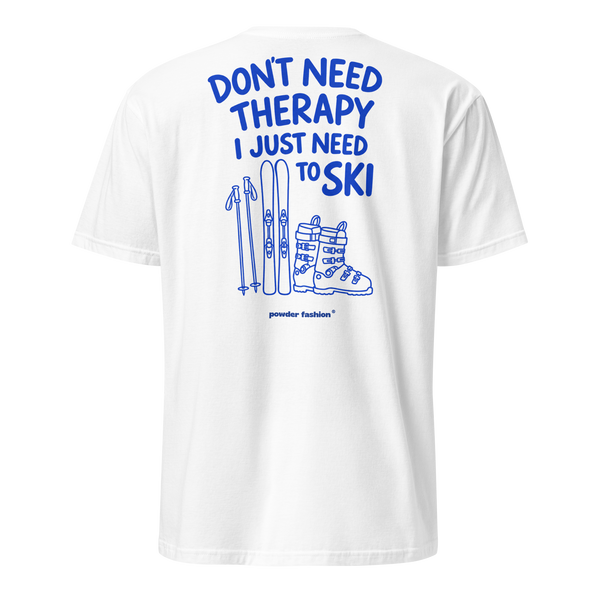
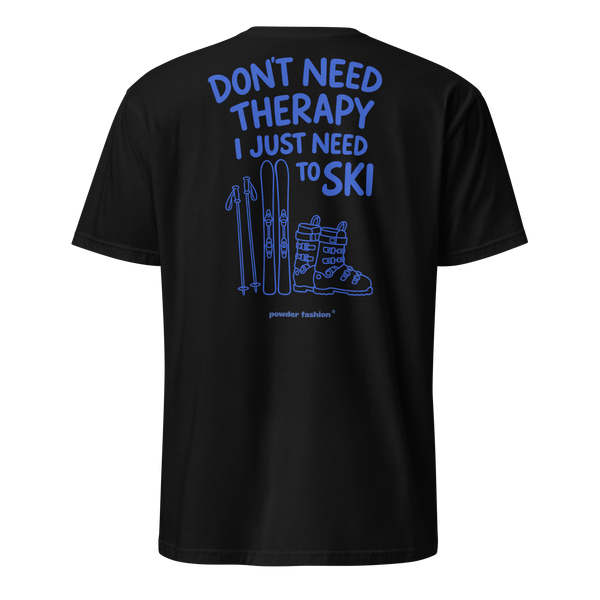
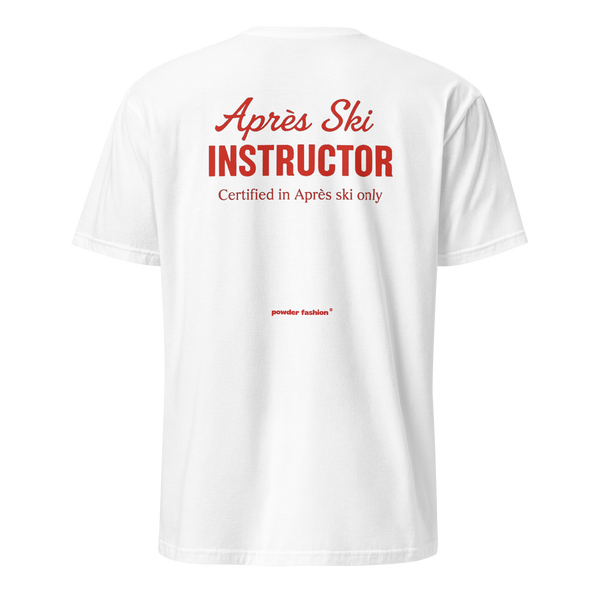
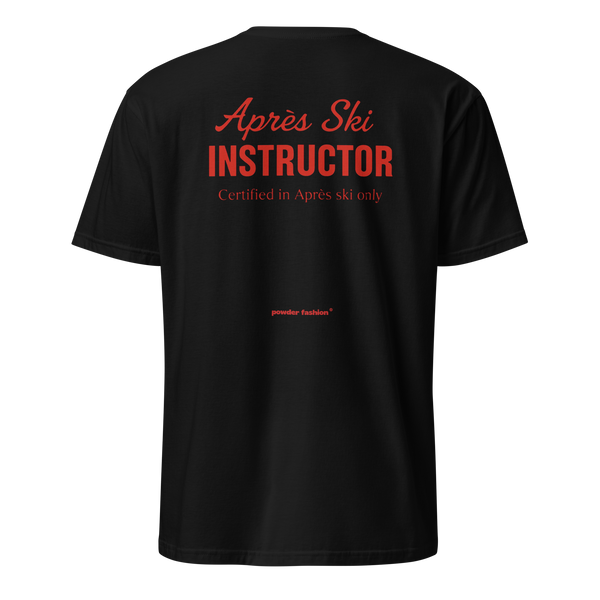
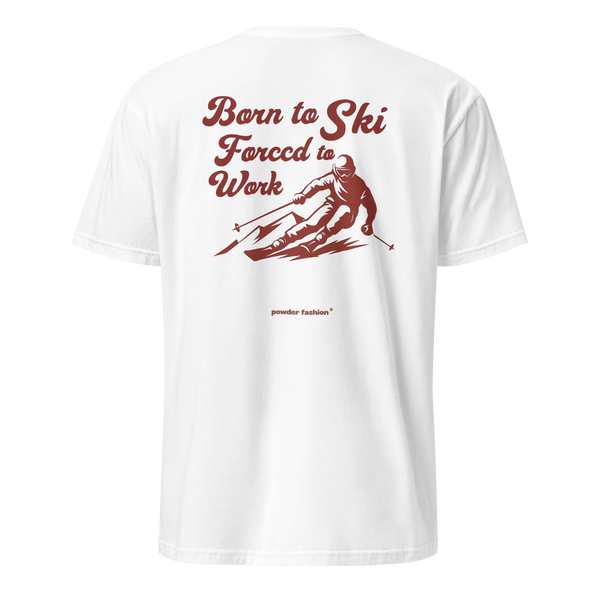
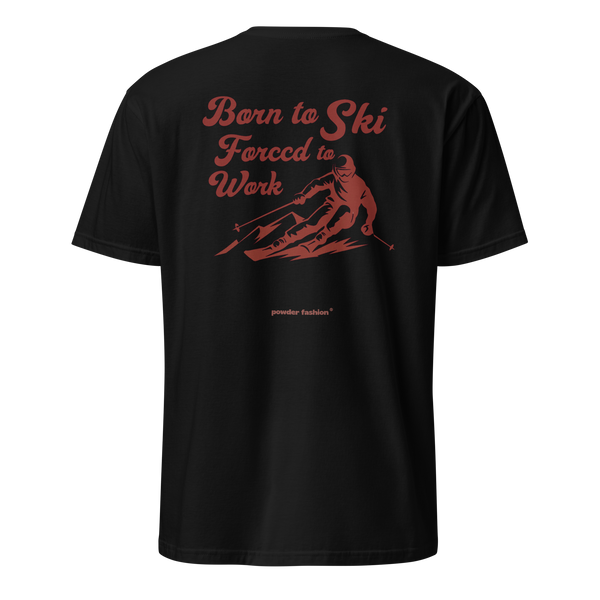
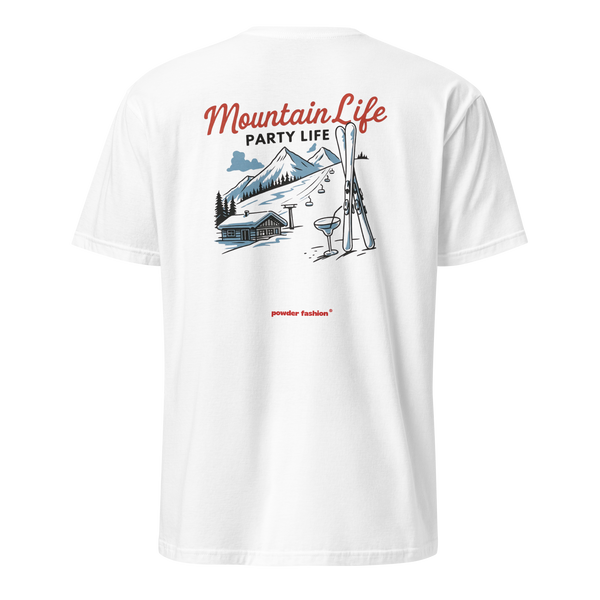
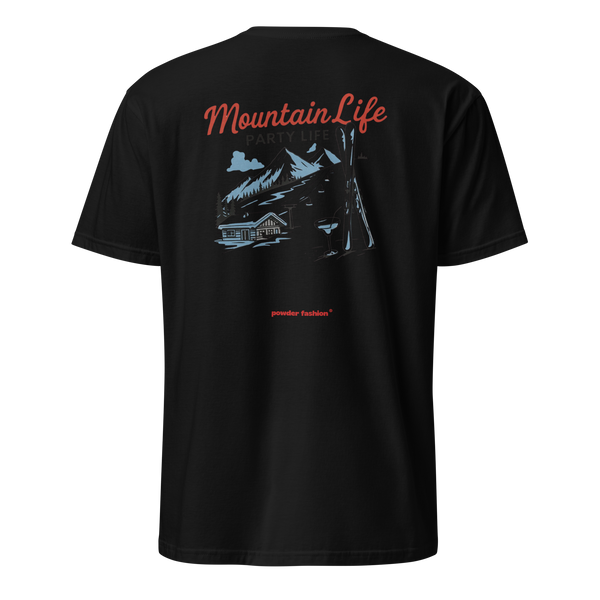
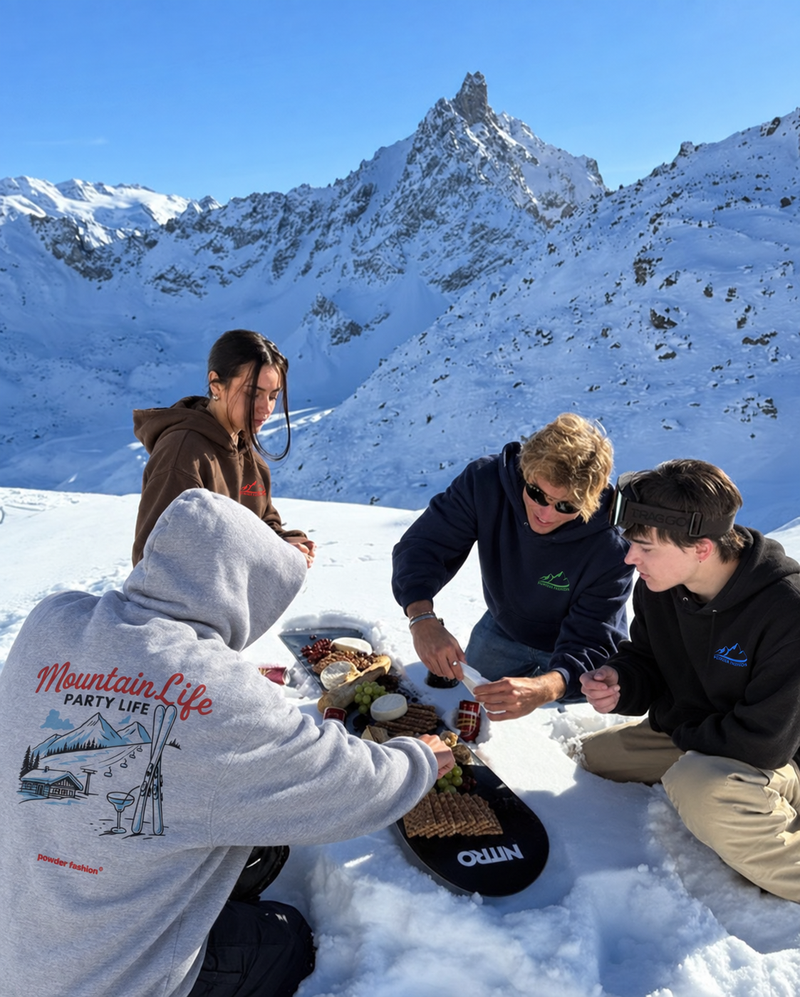
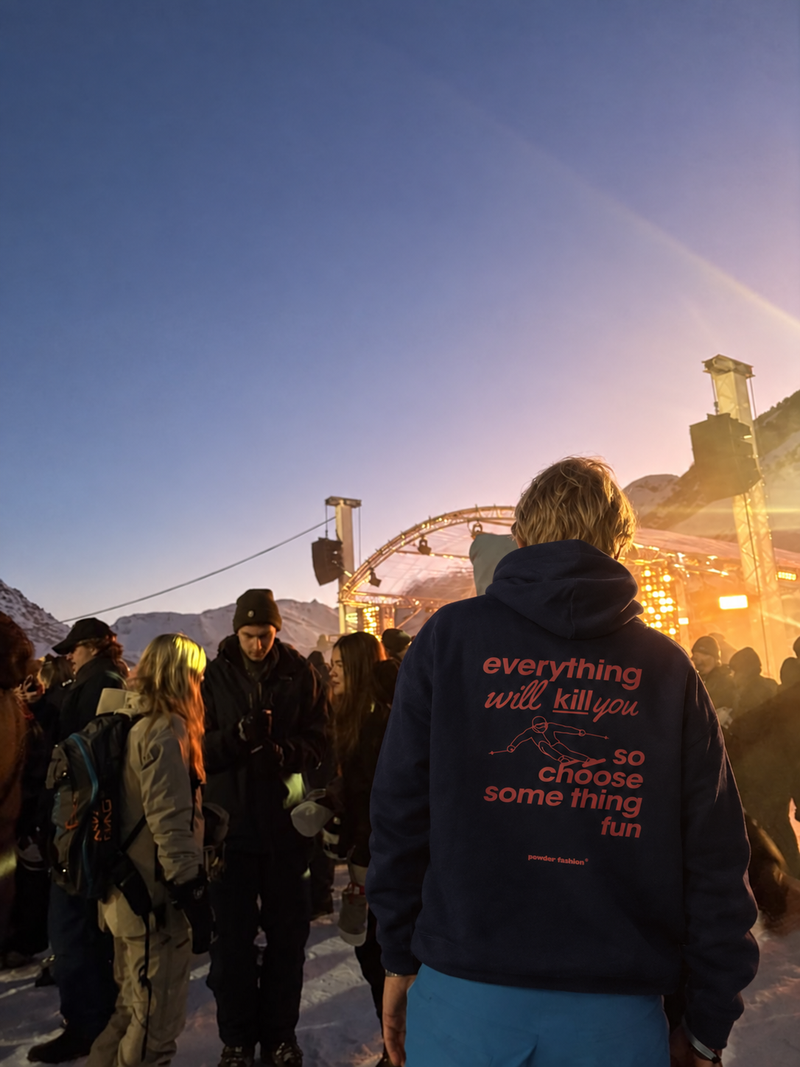
This is the layer we designed our ski hoodies for. The inside is brushed fleece, so it holds heat like a technical fleece would. The fit is roomy enough to go over a base layer without pulling, and the hood fits under a helmet when you need it on the lift. Because it is the layer that comes off first at après, it is also the layer with the print on the back. Nobody sees your base layer. Everybody sees your hoodie.
Shell: waterproof, breathable, and not too warm
A ski jacket and ski pants only need to do two things: keep wind and snow out and let sweat out. Look for a waterproof rating of at least 10,000 mm and taped seams. Insulated jackets feel great in the shop and too hot by eleven in the morning, so unless you ski in very cold places, a non-insulated shell with a good mid layer is more flexible. Pit zips under the arms are the single most useful feature on a ski jacket. Use them.
Ski pants follow the same rule. Bib pants are warmer and keep snow out when you fall, regular pants are easier at lunch. Both are fine.
Head, hands and feet
- Helmet. Always. Rent one if you do not own one. A thin beanie or a helmet liner goes underneath on cold days.
- Goggles for snow and flat light, sunglasses for blue skies. Take both, the weather changes.
- Gloves or mittens. Mittens are warmer, gloves are handier. Cold hands are the number one reason people go in early, so this is not the place to save money.
- Ski socks. One pair, thin, knee high, merino or synthetic. Two pairs of socks makes your feet colder, not warmer, because it cuts off the blood flow in the boot.
- Neck warmer. A buff or a neck gaiter covers the gap between jacket and helmet and doubles as a face cover on the lift.
Five mistakes that leave you cold
- Cotton base layer. The most common mistake by far. Save the cotton T-shirt for après.
- Too many layers. You sweat on the first run, the sweat cools, and you spend the rest of the day cold. Start slightly cool and warm up.
- Jeans under ski pants. They get wet and stay wet. A thin base layer is warmer.
- Two pairs of socks. See above.
- Leaving the jacket open on the lift. The chairlift is the coldest part of the day. Zip up before you sit down, open up when you get off.
A ski outfit for every kind of day
Cold and snowing (below minus 10): merino base layer, fleece, insulated shell or shell plus a thin down jacket, mittens, helmet liner, goggles.
Normal winter day (around minus 5): base layer, hoodie or fleece, shell, gloves, goggles. This is most days in the Alps.
Sunny spring day (above zero): base layer, hoodie, shell in the backpack for the lift, sunglasses, sunscreen. This is the day the après-ski terrace opens at two.
What to pack for a week
Two base layers, two mid layers, one shell, two pairs of ski socks, one pair of gloves and a spare, one helmet, goggles and sunglasses. For everything else, from the walk home to the bar, read our ski trip packing list, and for the layer everyone sees once the jackets come off, our guide on what to wear for après ski.
Ski hard, party harderOriginal ski T-shirts and hoodies with back prints made for the chairlift and the après bar. Free worldwide shipping, 14-day returns.
Shop the collection